

The Great Decoupling: Why 2026 is the Year Tech Finally Grew Up
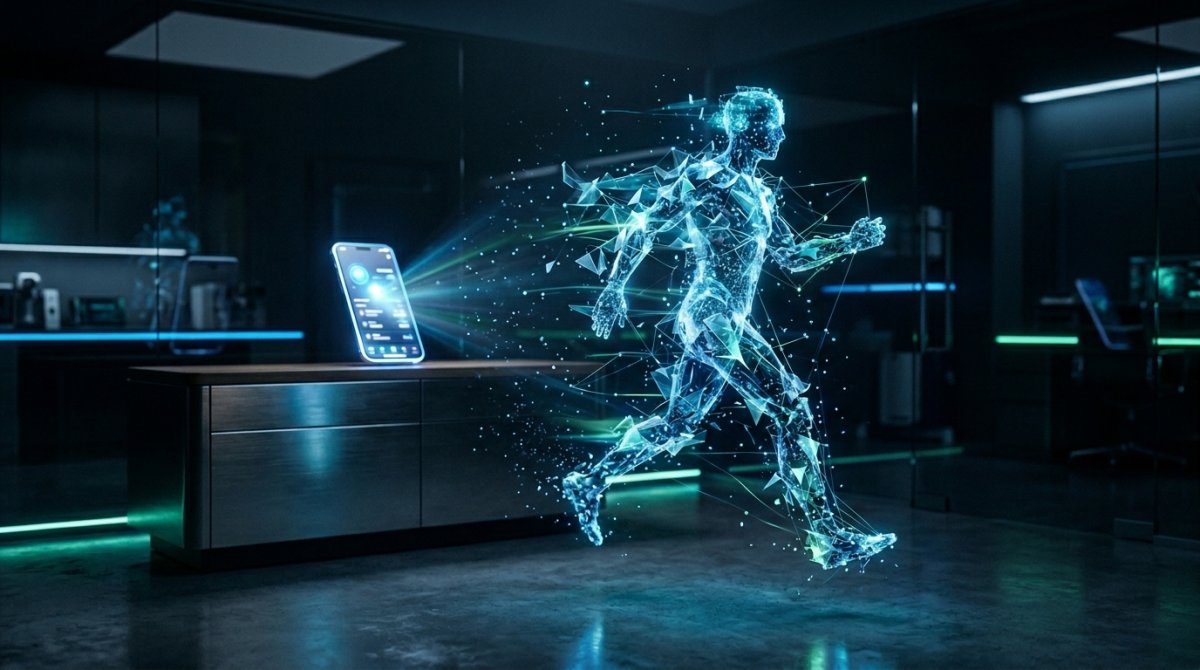
The shift from Generative AI to Agentic AI is the single most consequential development of the year. We no longer live in a world of chatbots that wait for a command; we live in a world of autonomous systems that pursue goals. Your smartphone is no longer just a communication device; it is a coordinator that manages multi-step workflows—requesting human approval only at critical decision points.
The End of the "Prompt" Era
For the last three years, we have lived in the era of the "Prompt." We learned how to talk to machines, coaxing them to write our emails or generate images. But as we cross into May 2026, that era is effectively over. We are witnessing The Great Decoupling—the moment where artificial intelligence moves from being a tool we use to an agent that acts on our behalf.
The shift from Generative AI to Agentic AI is the single most consequential development of the year. We no longer live in a world of chatbots that wait for a command; we live in a world of autonomous systems that pursue goals. Your smartphone is no longer just a communication device; it is a coordinator that manages multi-step workflows—requesting human approval only at critical decision points.
Embodied Intelligence: AI Gets a Body
If 2025 was the year AI found its voice, 2026 is the year it found its legs. Physical AI—the term for embodied intelligence—is moving from limited laboratory pilots into the mainstream enterprise and domestic environments.
At the start of this year, the tech world was transfixed by the surge of humanoid robots. Brands like Unitree, Agibot, and Apptronik are no longer just showing prototypes; they are deploying units that can fold clothes, serve food, and operate in industrial monitoring roles. Unlike the rigid, single-task machines of the past decade, these 2026 models are adaptive systems that navigate unstructured environments and learn from their physical interactions.
The "Dream Battery" and the Hardware Race
The massive compute and physical energy demands of these new agents have triggered a frantic hardware race. The "Sweet Spot" in 2026 isn't just about faster chips, but about how we power them.
We are currently seeing a breakthrough in all-solid-state batteries. These next-generation power sources replace liquid electrolytes with solid ones, offering superior energy density and safety. Interestingly, while the automotive industry has been the primary target for this tech, the robotics market has emerged as the first true commercial application for solid-state power. Because robots don't require the same massive scale as electric vehicles (EVs), companies like Samsung SDI are targeting this year and 2027 for the first wave of mass-produced solid-state units for humanoid assistants.
Parallel to this, we see Paper Batteries emerging for microelectronics. Fireproof and made of solid-state architecture, these support a new wave of "smart labels" and wearable health biometrics that are far more sustainable than the lithium-ion waste of previous years.
Spatial Computing: The Screen-less Future
As hardware evolves, the way we interface with it is becoming ambient. Spatial Computing has finally merged AI, computer vision, and sensor technologies to create a fluid interface between the physical and digital worlds.
We are moving away from traditional models where people must adapt to flat screens. In 2026, AI assistants are no longer locked in apps; they live on our faces in AR glasses, in our ears through smart buds, and on our wrists. This "ambient intelligence" allows tech to fade into the background, appearing only when the context of our physical environment requires it.
The Strategic Shift for NxTrendZ Readers
For the tech-savvy professional, the lesson of May 2026 is clear: AI is no longer an addition to the workflow; AI is the workflow. The most successful individuals and businesses this year are those who stop defining themselves by their ability to do a task, and start defining themselves by their ability to direct an agent.
We are at a turning point where technology is moving from a tool that helps us work faster to an autonomous infrastructure that runs the world around us—from AI-managed power grids to personalized precision medicine that detects disease before symptoms even appear.
Conclusion
The "Tech Insights" of today are no longer about specs and megahertz. They are about autonomy, embodiment, and the quiet integration of intelligence into every physical object we touch. At NxTrendZ, we will continue to track this evolution, but for now, the message is simple: The future isn't something you wait for; it's something your AI agent has already scheduled for you.
What's Your Reaction?
 Like
0
Like
0
 Dislike
0
Dislike
0
 Love
0
Love
0
 Funny
0
Funny
0
 Wow
0
Wow
0
 Sad
0
Sad
0
 Angry
0
Angry
0




Comments (0)