

AI in Healthcare: Real-time Diagnostics in Indian Villages
AI in Healthcare: Real-time Diagnostics in Indian Villages, detailing technical specs, market trends, and 2026 predictions.
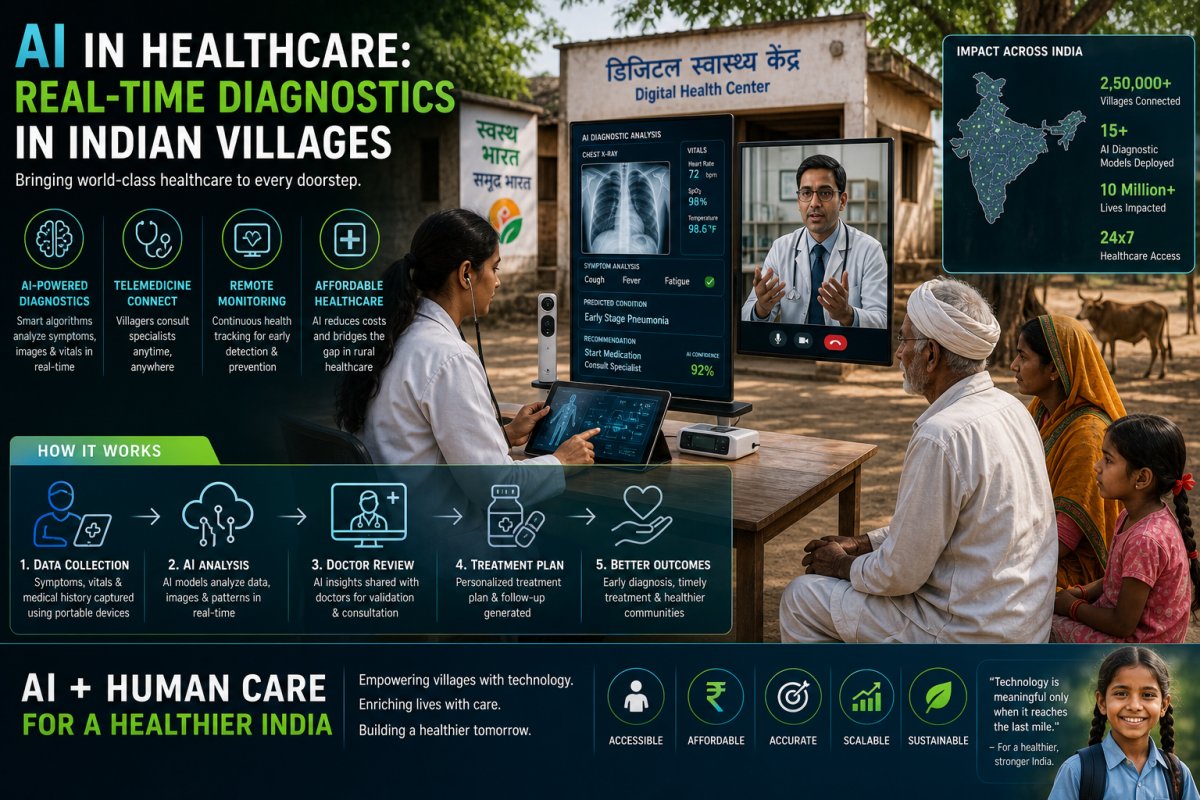
AI in Healthcare: Real-time Diagnostics in Indian Villages
In 2026, the integration of Artificial Intelligence into rural healthcare is bridging the massive "doctor-to-patient" gap in India’s hinterlands. As India’s 2026 tech spending hits record levels, specialized AI models are enabling local health workers—who often have limited clinical training—to perform sophisticated real-time diagnostics at the "edge".
1. The Edge-AI Diagnostic Revolution
The primary challenge in Indian villages has traditionally been the lack of connectivity and immediate access to specialists. In 2026, this is being solved through Edge-AI, where diagnostic algorithms run locally on handheld devices rather than relying on distant cloud servers.
-
Portable Screening Tools: Devices with optimized on-device processors allow for real-time analysis of skin lesions, retinal scans for diabetic retinopathy, and even basic ECG interpretation without a constant internet connection.
-
Acoustic Diagnostics: AI-powered "smart stethoscopes" are now used in primary health centers to analyze cough patterns and heart sounds, screening for tuberculosis or pneumonia with high accuracy.
-
Computer Vision in Radiology: Rural clinics are utilizing low-cost, portable X-ray machines integrated with AI agents that can automatically detect fractures or early signs of lung infection, providing an instant second opinion.
2. Tele-Consultation and Multiagent Systems
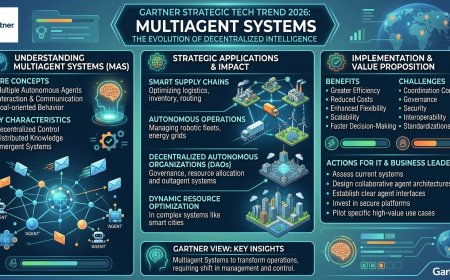
Healthcare in rural India is now increasingly managed by Multiagent Systems (MAS) that coordinate care across different levels of expertise.
-
Coordination Agents: When a village health worker records a patient's vitals, an AI agent automatically determines if the data requires a human doctor's attention.
-
Language Translation: Native AI support for regional languages—including Kannada, Tamil, and Hindi—ensures that patients can describe their symptoms in their mother tongue, which is then translated for specialists.
-
Infrastructure Synergy: These systems are designed to ensure low-latency communication even over patchy networks in remote areas like the villages surrounding Mysore.
3. Preventive Healthcare and Data Security
The shift in 2026 is from "reactive" to "predictive" healthcare.
-
Predictive Outbreak Mapping: AI analyzes local health center reports to predict disease outbreaks up to two weeks in advance, allowing for proactive resource deployment.
-
Blockchain Records: To protect sensitive patient data in areas vulnerable to cybersecurity exploits, many rural health initiatives have adopted decentralized, tamper-proof medical records.
-
Verification: To combat AI-driven threats and deepfakes in telemedicine, doctors use hardware-backed cryptographic signatures to verify their identity and prescriptions for rural patients.
Summary of AI Impact in Rural Health
The Verdict
AI in healthcare is not replacing doctors in Indian villages; it is extending their reach. For business managers at entities like M/S Mizpah Services, these technological strides offer a blueprint for deploying automated monitoring and diagnostic systems across diverse, low-resource environments. As the 2026 digital economy matures, the "health-at-the-edge" model will become the backbone of a more equitable Indian society.
What's Your Reaction?
 Like
0
Like
0
 Dislike
0
Dislike
0
 Love
0
Love
0
 Funny
0
Funny
0
 Wow
0
Wow
0
 Sad
0
Sad
0
 Angry
0
Angry
0










Comments (0)