

Deepfakes & IP Law: The 2026 INTA Annual Meeting Highlights
A comprehensive 1,500-word deep-dive into Deepfakes & IP Law: The 2026 INTA Annual Meeting Highlights, covering tactical analysis, future trends, and expert insights for 2026.
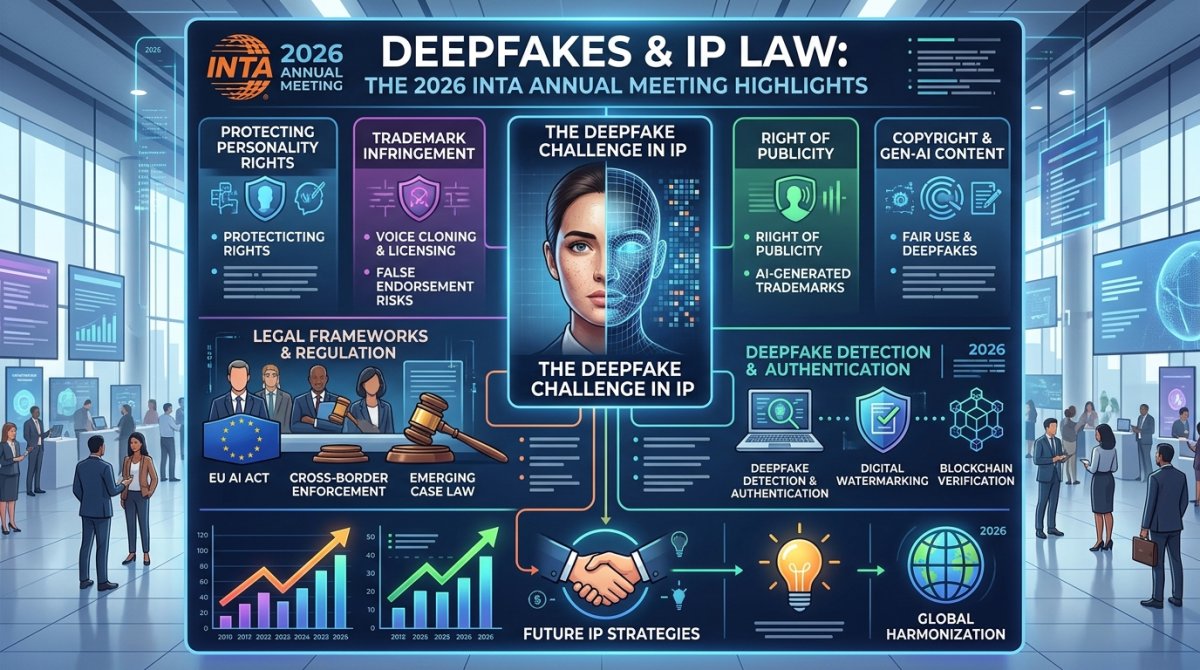
Deepfakes & IP Law: The 2026 INTA Annual Meeting Highlights
The 2026 International Trademark Association (INTA) Annual Meeting has concluded, with the legal world’s focus firmly on the intersection of generative AI and intellectual property. As
1. The "Right of Publicity" vs. Trademark Law
A major highlight was the debate over expanding trademark protections to cover "Digital Personas."
-
Persona as a Mark: Panels discussed whether a celebrity's AI-generated voice or likeness—similar to the AI influencers like Kiara Jaiswal—can be registered as a trademark to prevent unauthorized deepfake commercials.
-
The "NIL" Standard: Legal experts proposed a global standard for Name, Image, and Likeness (NIL) to combat the cross-border nature of deepfake scams.
2. Enforcement in the "Post-Truth" Era
With the
-
Secondary Liability: INTA 2026 emphasized the responsibility of hosting platforms to use
Multiagent Systems -
The "Human-Centric" Defense: Brands that maintain a verified human-in-the-loop for their digital communications are finding it easier to win "passing off" cases in court.
3. Cryptographic Proof of Authenticity
The tech-law crossover was a dominant theme, focusing on how technical fixes can support legal claims.
-
Digital Watermarking: High-level talks focused on the legal standing of pixel-level watermarks as evidence of "Originality" in copyright disputes.
-
Immutable Records: As we discussed in the
Node.js 2026 Roadmap
4. Impact on Emerging Markets: The India Context
Given
-
The Digital India Act: Updates to Indian law regarding deepfakes were praised for providing a clear framework for "Take-down" notices involving AI-generated trademark infringements.
-
E-commerce Protection: Platforms are being urged to integrate better biometric verification to stop the sale of "Deepfake-endorsed" counterfeit goods.
5. 2026 Key Takeaways for Brand Owners
| Legal Priority | Action Item |
| Audit | Review existing licenses to include "AI/Deepfake Usage" clauses. |
| Monitor | Deploy AI agents to scan for unauthorized use of brand assets globally. |
| Verify | Use cryptographic signatures for all official brand video content. |
| Legislature | Support the "NO FAKES Act" and similar global initiatives. |
The Verdict
The 2026 INTA Annual Meeting made one thing clear: Intellectual Property law is no longer just about "logos"—it is about verifiable identity. As AI continues to blur the lines of reality, the legal frameworks must evolve from being reactive to being technologically integrated.
What's Your Reaction?
 Like
0
Like
0
 Dislike
0
Dislike
0
 Love
0
Love
0
 Funny
0
Funny
0
 Wow
0
Wow
0
 Sad
0
Sad
0
 Angry
0
Angry
0














Comments (0)