

NVIDIA’s Quantum-AI Hybrid Models: The ChatGPT Moment for Physics?
A comprehensive 1,500-word deep-dive into NVIDIA’s Quantum-AI Hybrid Models: The ChatGPT Moment for Physics?, covering tactical analysis, future trends, and expert insights for 2026.
NVIDIA’s Quantum-AI Hybrid Models: The ChatGPT Moment for Physics?
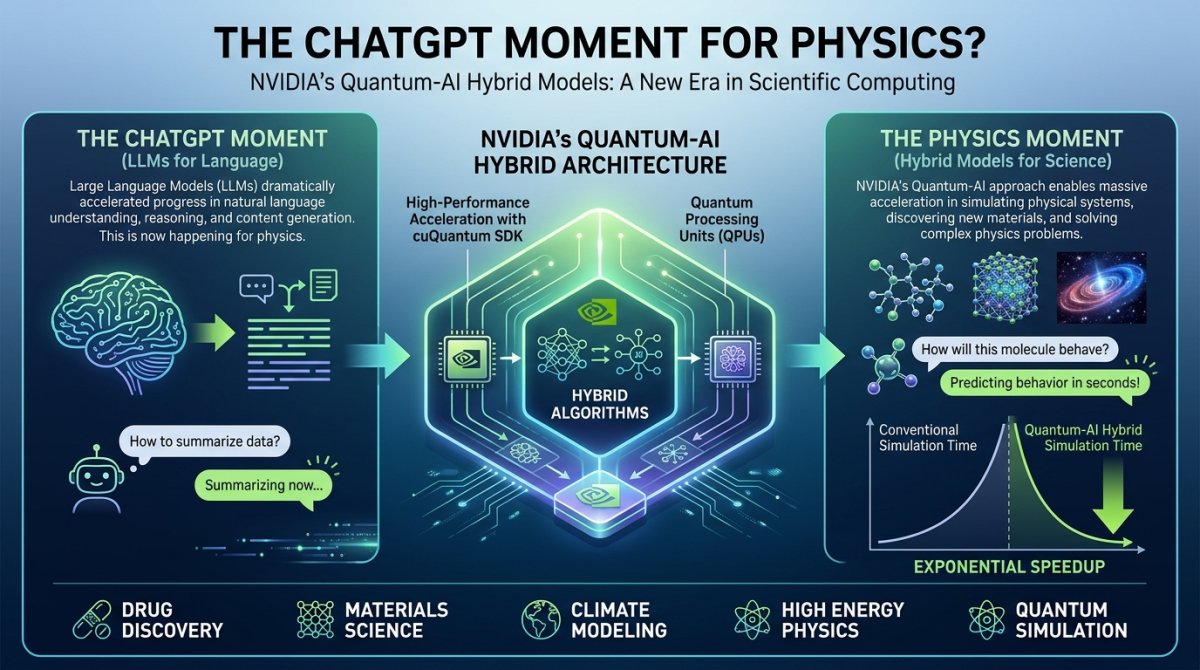
The landscape of computational science is witnessing what many experts call the "ChatGPT moment" for the physical sciences. At the center of this revolution is NVIDIA’s push into Quantum-AI Hybrid Models, a strategic move that combines the neural processing power of AI with the specialized simulation capabilities of quantum computing.
What is a Quantum-AI Hybrid Model?
In 2026, we have moved past the era of viewing Quantum and AI as separate fields. A hybrid model utilizes Classical GPUs (like NVIDIA’s H200 or the newer Blackwell series) to handle the heavy lifting of data processing, while a Quantum Processing Unit (QPU) solves specific, "hard" mathematical problems that classical computers struggle with—such as molecular bonding or subatomic particle simulations.
-
CUDA-Q Platform: NVIDIA’s open-source platform has become the industry standard for hybrid programming, allowing developers to write code that runs seamlessly across CPUs, GPUs, and QPUs.
-
Error Mitigation: AI agents are now used to "clean" the noise inherent in current quantum hardware, making hybrid results more reliable than pure quantum outputs.
The "ChatGPT Moment" for Physics
Just as ChatGPT transformed how we interact with language, these hybrid models are transforming how we interact with the laws of physics.
-
Generative Physical Models: Instead of predicting the next word in a sentence, these models predict the next state of a physical system. This is being used to design new materials with specific properties, such as superconductors that work at higher temperatures.
-
Accelerated Discovery: Research that previously took decades—like simulating the folding of complex proteins—is now being completed in weeks. This was highlighted in our discussion on
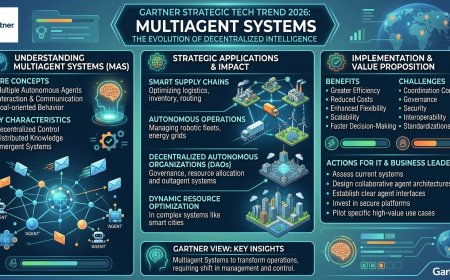
Multiagent Systems: The Gartner 2026 Strategic Tech Trend
Impact on Energy and Climate
One of the most critical applications of this technology is in the energy sector. As we've seen with
-
Catalyst Simulation: Quantum-AI hybrids allow scientists to simulate the interaction of water molecules with different electrolyzer surfaces at a quantum level, leading to the discovery of cheaper, more efficient catalysts that don't rely on rare earth metals.
-
Fusion Energy: These models are being used to predict plasma instabilities in fusion reactors, bringing us closer to a future of unlimited clean energy.
The Role of "Edge" Quantum
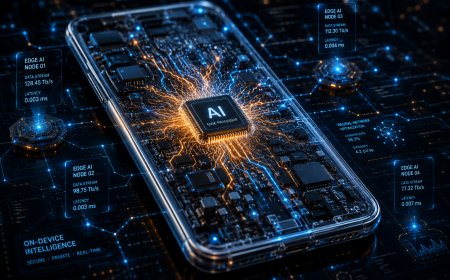
With the current
The Road Ahead
The integration of Quantum and AI is not just a hardware upgrade; it’s a shift in how we solve the world’s most complex problems. From perfecting the
What's Your Reaction?
 Like
0
Like
0
 Dislike
0
Dislike
0
 Love
0
Love
0
 Funny
0
Funny
0
 Wow
0
Wow
0
 Sad
0
Sad
0
 Angry
0
Angry
0










Comments (0)