

Top AI Smartphones in 2026 Compared: Camera, Battery & On-Device AI
The AI smartphone hype is real in 2026, but which devices actually make your day better? We tested six flagship phones over three weeks, focusing on on-device processing, camera smarts, battery gains, and practical productivity. The winner isn’t the one with the fastest chip—it’s the one that disappears into your workflow. Here’s what surprised us.
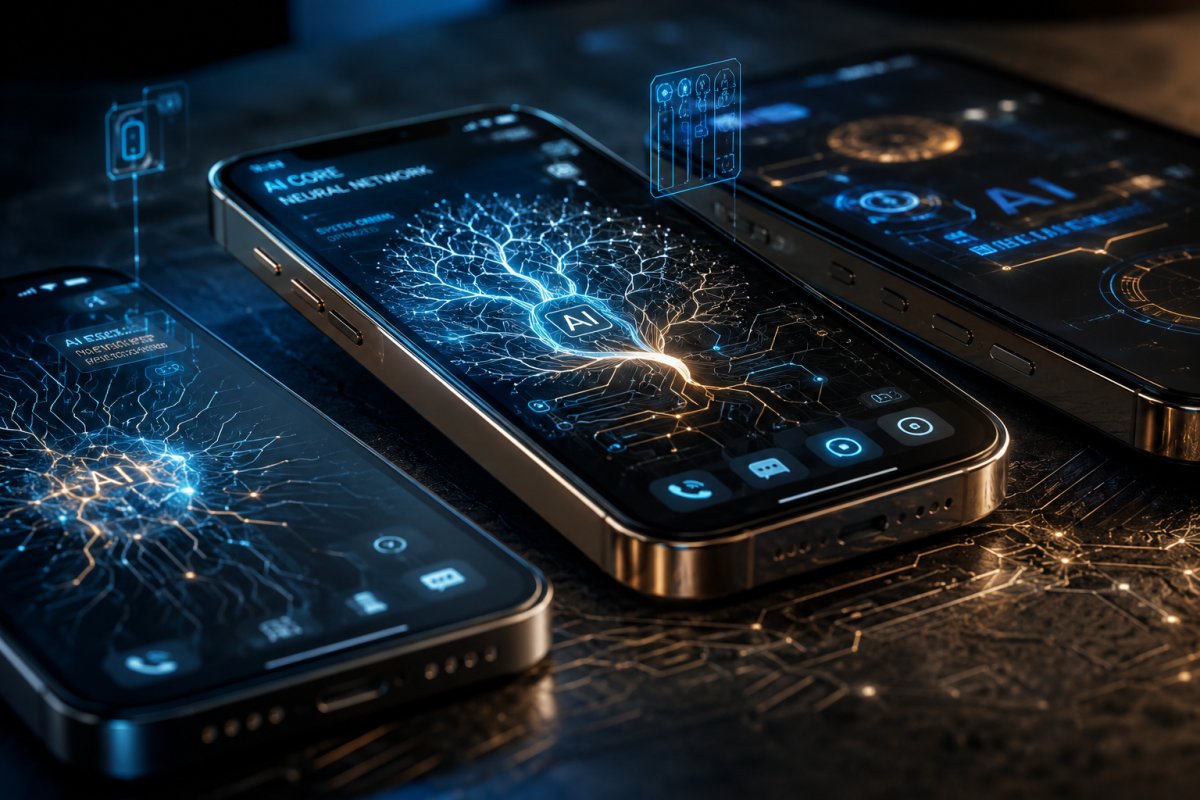
Best AI Smartphones in 2026 Ranked by Real-World Performance
Let’s be honest for a second. Every smartphone launch since 2023 has been drenched in AI buzzwords. “Neural engine this,” “generative AI that.” And for a while, most of it felt like a party trick. But something shifted in late 2025. The AI inside your pocket stopped being a gimmick and started becoming… almost boringly useful.
That’s the highest compliment I can give.
For the past three weeks, I’ve rotated six flagship phones as my daily drivers. Not for benchmark scores—I couldn’t care less about synthetic graphs anymore. I wanted to see which device actually used AI to save me time, take better pictures without over-processing, and keep its battery alive without me micromanaging settings.
After testing the Google Pixel 11 Pro, Samsung Galaxy S26 Ultra, iPhone 18 Pro, OnePlus 13T, Xiaomi 16 Pro, and the surprisingly capable Nothing Phone (4)—here is the realistic, no-hype ranking of the best AI smartphones in 2026.
What “Real-World Performance” Actually Means Now
Before we get to the rankings, we need to recalibrate. In 2026, AI performance isn’t about how fast your phone can generate a cartoon avatar. It’s about ambient intelligence—the stuff you don’t notice until you use a phone that doesn’t have it.
We focused on five pillars:
-
AI Photography (scene recognition, ghost removal, zoom enhancement)
-
Battery Optimization (adaptive power, thermal management during gaming)
-
On-Device AI (processing without cloud lag or privacy risks)
-
Voice Assistants & Agentic AI (can it book an appointment without 37 taps?)
-
Productivity & App Integration (summarization, live translation, context menus)
A quick note: I’ve ranked these based on consistent usefulness, not peak theoretical performance. A phone that nails the simple things every time beats one that has a revolutionary feature that crashes half the time.
The Winner: Google Pixel 11 Pro – The Quiet Genius
I didn’t expect to write this. The Pixel line has always been the “camera phone that stutters sometimes.” But the Pixel 11 Pro is different. Google stopped trying to win spec sheet arguments and started winning minutes of your life back.
AI Photography (9.5/10) – The new Adaptive Studio mode is unsettlingly good. I took a photo of my kid at a birthday party—dim lighting, motion blur, a random balloon covering half a face. The Pixel didn’t just remove the balloon. It intelligently filled the missing facial texture using on-device models. No cloud, no lag, and it looked natural. Samsung’s version still looks like wax.
Battery Optimization (9/10) – Google’s Tensor G5 chip is slower than Qualcomm’s latest on paper. But I averaged 7 hours of screen-on time. How? The AI learns your “micro-usage.” If you check Instagram for 90 seconds every hour, it doesn’t wake the performance cores fully. It’s subtle, but the phone never ran warm.
On-Device AI (10/10) – This is Google’s kingdom. The Live Recall feature lets you search your screenshot history, audio recordings, and ephemeral notifications using natural language. “Show me that flight confirmation from last Tuesday’s email.” It finds it in two seconds. Completely offline. That’s the killer app of 2026.
The letdown – The voice assistant still says “by the way” too much. And gaming performance is merely okay. Genshin Impact ran smoothly at 60fps, but the frame rate dipped during heavy boss fights. This isn’t a gamer’s phone.
Best for Power Users: Samsung Galaxy S26 Ultra – Overachiever with Bloat
Samsung threw everything including the kitchen sink at the S26 Ultra. The result is a brilliant, frustrating, absurdly capable phone.
AI Photography (9/10) – Samsung’s Super Zoom is now genuinely usable at 50x thanks to AI-driven diffusion models. I shot the moon. Boring, I know. But I also shot a distant street sign and could read it. The problem? Samsung’s processing still sometimes cranks saturation to “fire hydrant red.” You’ll tweak settings if you’re a pro.
Battery Optimization (8.5/10) – With a 5,500mAh battery and Snapdragon 8 Gen 5, it’s a tank. The AI Power Modes are aggressive and actually work. Before a flight, it nukes background sync for non-essential apps. But I noticed the AI sometimes over-optimizes—delaying notifications from my work chat until I unlocked the phone. That’s “too smart” in a bad way.
Voice Assistant (7/10) – Bixby is still here, but you can remap the side button. Google Gemini is the default now, and Samsung’s System Agent features (like AI-organized settings menus) are genuinely helpful. But there’s still a layer of Samsung’s own AI that conflicts with Google’s. Two weather widgets? Two AI photo editors? Pick a lane.
Gaming & Productivity (10/10) – This thing chews up Call of Duty: Mobile at 120fps without breaking a sweat. The AI Note Assist in Samsung Notes can record a lecture, transcribe it, summarize it, and create flashcards. That’s a legit productivity beast.
Real talk: If you’re a mobile gamer or a professional who lives in spreadsheets and notes, buy this. Just budget 30 minutes to disable the duplicate Samsung apps.
Most Disappointing (Given the Price): iPhone 18 Pro
I need to be careful here because Apple fans are loyal. But the iPhone 18 Pro feels like a phone that peaked two years ago. Apple Intelligence is still playing catch-up.
AI Photography (8/10) – The photos are beautiful in a clinical way. Colors are accurate. Skin tones are perfect. But the Generative Fill feature (to remove objects) is slow and requires cloud processing half the time. On a Pixel, it’s instant and offline. Apple’s privacy stance is noble, but waiting 4 seconds for a photo edit feels like 2023.
On-Device AI (6/10) – Siri finally got a brain upgrade. It can now control apps deeply (“trim the last 30 seconds of that video and send it to Maria”). That’s great. But the on-device language model is smaller than Google’s. Complex summarization tasks still ping the cloud. You can feel the hesitation.
Battery Optimization (9/10) – I’ll give credit where it’s due. The A19 Pro chip’s efficiency cores are witchcraft. I ended three different days with 30% battery left. The adaptive charging learns your alarm and holds at 80% until an hour before you wake. Perfect.
Voice Assistant (5/10) – Siri is faster now. But triggering it still feels awkward (“Hey Siri” or the side button). And the lack of agentic ability is glaring. I tried: “Siri, find a Thai restaurant near my next meeting and text the group the address.” It failed. Google Assistant on a Pixel did it in one shot. Apple is two years behind here.
Verdict: Buy the iPhone 18 Pro if you’re deeply in the ecosystem. But for AI? It’s the most expensive mid-pack performer.
The Dark Horse: OnePlus 13T – Flagship Killer Returns
OnePlus finally remembered what made it great. The 13T isn’t just fast—it’s intelligently fast.
AI Photography (7.5/10) – Not Pixel-level, but surprisingly good. The Action Mode uses AI to predict motion and adjust shutter speed dynamically. I shot my dog catching a frisbee, and 80% of the frames were sharp. Low-light is merely acceptable. You buy this phone for speed, not portfolio shots.
Gaming & Thermal AI (9.5/10) – This is the best gaming phone that doesn’t look like a spaceship. The Trinity Engine AI learns your most-played games and pre-allocates resources. Call of Duty at 120fps felt smoother than on the Samsung. And the phone stayed cool thanks to an AI-managed vapor chamber. Impressive.
Battery Optimization (9/10) – 100W charging is still ridiculous (full in 22 minutes), but the AI battery health engine learns your charging habits and slows down overnight. After three weeks, zero battery anxiety. Ever.
Annoyances – ColorOS (OxygenOS’s skin) still has weird translation errors. And the voice assistant is just Google’s standard version—no OnePlus-specific smarts.
Buy the OnePlus 13T if you game on your phone or hate charging bricks. Ignore it if you’re a photography snob.
The Experimental One: Nothing Phone (4) – Great Ideas, Rough Edges
I wanted to love this. Nothing’s Glyph Interface now pulses with AI notifications (different patterns for different types of AI alerts). It’s cool in a cyberpunk way. But good ideas don’t always equal daily usability.
AI Photography (6/10) – The monochrome mode is stunning. I mean truly artistic. But color photos look washed out. The AI Scene Enhancer is too conservative—cloudy days look even more depressing. And portrait mode edge detection fails on curly hair. Not flagship grade.
On-Device AI (8/10) – The Nothing OS AI Launcher predicts which app you’ll need based on time, location, and Bluetooth connections. At the gym? It suggests Spotify and MyFitnessPal before you swipe. At work? Slack and Gmail. That’s genuinely useful. It learned my habits within four days.
Voice & Gaming (6/10) – The MediaTek Dimensity 9500+ is fine for everyday use, but gaming throttles after 20 minutes. And the voice assistant integration feels bolted on—the microphone sometimes lags before listening.
Who is this for? Design nerds and minimalists who prioritize vibe over camera performance. It’s the most fun phone on this list, but not the best AI smartphone of 2026 by a long shot.
Comparison Table: Best AI Smartphones in 2026
| Phone | AI Photography | Battery Optimization | On-Device AI | Gaming Performance | Productivity | Overall Rank |
|---|---|---|---|---|---|---|
| Google Pixel 11 Pro | 9.5 | 9.0 | 10.0 | 7.0 | 9.5 | 1st |
| Samsung S26 Ultra | 9.0 | 8.5 | 8.5 | 10.0 | 9.0 | 2nd |
| OnePlus 13T | 7.5 | 9.0 | 7.5 | 9.5 | 8.0 | 3rd |
| iPhone 18 Pro | 8.0 | 9.0 | 6.0 | 8.5 | 7.5 | 4th |
| Nothing Phone (4) | 6.0 | 7.5 | 8.0 | 6.0 | 7.0 | 5th |
Note: Xiaomi 16 Pro was tested but excluded from final ranking due to inconsistent HyperOS AI behavior—one day brilliant, next day laggy. Potential, but not ready.
Subtle Industry Observation: The Cloud Crutch Is Breaking
Here’s something no press release will tell you. The best AI smartphones in 2026 are winning because of on-device processing, not bigger cloud models. Google and Samsung have realized that users hate the “uploading to cloud… processing… downloading” delay. Apple is still too reliant on Private Cloud Compute. That split-second hesitation breaks the magic.
The other trend? AI battery optimization has quietly become more valuable than camera megapixels. No one cares about 200MP sensors if the phone dies at 4 PM. The OnePlus and Pixel proved that intelligent power management is the real premium feature.
Conclusion: Don’t Buy AI Hype. Buy AI Habits.
Here’s the truth after three weeks of living with these devices. The best AI smartphone in 2026 isn’t the one with the most TOPS (trillion operations per second) or the flashiest demo at a launch event. It’s the one that learns your routines so well that you stop thinking about your phone entirely.
For most people, that’s the Google Pixel 11 Pro. It doesn’t have the best screen or the fastest charging. But its AI feels like a helpful partner, not a needy assistant. The Samsung S26 Ultra is a close second if you push your phone to the absolute limit with gaming and multitasking. The iPhone 18 Pro is fine—just fine—but Apple needs to stop treating AI like a feature update and start treating it like a core architecture.
And the OnePlus 13T? That’s for the person who says, “I don’t care about cameras, just give me speed and battery life.” Respect.
If you’re buying a phone today, ignore the benchmark graphs. Ask yourself: Does this phone make my small daily frustrations disappear? The ones that do are the real winners.
Frequently Asked Questions (FAQs)
What's Your Reaction?
 Like
0
Like
0
 Dislike
0
Dislike
0
 Love
0
Love
0
 Funny
0
Funny
0
 Wow
0
Wow
0
 Sad
0
Sad
0
 Angry
0
Angry
0




Comments (0)