

From Factories to Living Rooms: The Pivot to Consumer Humanoid Robotics in 2026
A massive industry update on the robotics sector. We analyze why 2026 is the year humanoid robots have pivoted from lab-based pilots to at-home applications, driven by falling hardware costs and the "algorithmic warfare" mindset of decision-making.
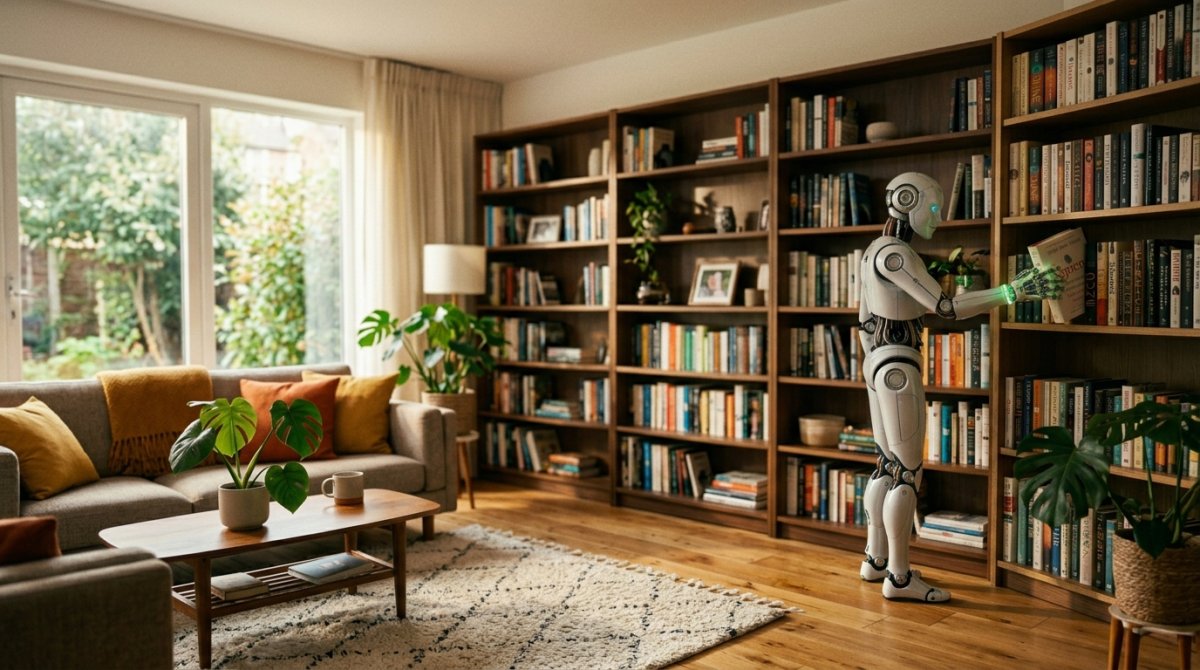
For years, the promise of a general-purpose robot in the home felt like science fiction. But as of May 2, 2026, the "logjam has broken". The convergence of maturing hardware with advanced foundation models has transformed robots from single-purpose machines into adaptive systems that can teach, help, and adapt to domestic environments.
The Convergence of Hardware and Software
Robotics hardware is maturing extremely quickly, leading to low-cost, reliable units that people can connect with emotionally. By "grafting" Large Language Models onto physical hardware, we now have humanoid robots that can remember, learn, and navigate complex spaces like a family kitchen or a busy warehouse. This isn't just a hardware upgrade; it's a software evolution where the "AI brain" takes full control of physical movements.
Algorithmic Warfare and Speed of Action
Interestingly, the same "speed, scale, and autonomy" parameters driving the $38.8 billion global military AI race are being applied to consumer robotics. The focus is on the "kill chain" of decision-making—compressing the cycle from sensing to acting into near real-time. In a domestic setting, this means a robot that doesn't just "see" a spill, but "decides" on the best cleaning method and "acts" before a human even notices.
Solid-State Power and Energy Density
Supporting these massive compute needs are solid-state batteries, which have replaced liquid electrolytes to improve energy density and safety in consumer electronics. This enables robots to run longer and charge faster without the fire risks that plagued earlier lithium-ion iterations. In 2026, innovation is no longer about experimentation; it is about real-world deployment that directly alters how we live and work
What's Your Reaction?
 Like
0
Like
0
 Dislike
0
Dislike
0
 Love
0
Love
0
 Funny
0
Funny
0
 Wow
0
Wow
0
 Sad
0
Sad
0
 Angry
0
Angry
0






Comments (0)